Translate

Featured Post

Welcome!

We are the writers of "The 9-3 Putout" and we will be writing articles about all facets of baseball, from the current game to the ...

Friday, July 19, 2019

Games in History: 2004 NLCS Game 5


The 2004 NLCS has been overshadowed due to the Boston Red Sox’s miracle comeback against the Yankees. Despite this, the 2004 NLCS was arguably one of the best postseason series of all time. The St. Louis Cardinals and Houston Astros squared off to determine who would go to the World Series.


After St. Louis took a 2-0 series lead in the first 2 games, the series shifted to Houston, where the Astros won 2 to bring up a critical game 5. The winner of Game 5 shifts the momentum of the series in games 6 and 7. Game 5 pitted St. Louis starter Woody Williams against the young Brandon Backe of the Astros.

Embed from Getty Images>

Williams, the 2003 All Star, had to deal with a top heavy Houston Astros order of Craig Biggio, Carlos Beltran, Lance Berkman, Jeff Bagwell, and Jeff Kent. Backe, although he went 6 innings and allowed 2 runs in his NLDS start, struck little fear into the dangerous Cardinals lineup of Tony Womack, Larry Walker, Albert Pujols, Scott Rolen, Jim Edmonds, Edgar Renteria and Reggie Sanders, with Mike Matheney and Williams finishing out the order. Backe, who pitched to the tune of a 4.98 ERA and 5.01 FIP so far into his career, had a challenge ahead.


Both pitchers started out strong. Backe retired the first 13 Cardinals he faced and Williams gave up a single, 2 walks and HBP, which did no damage. Backe ran into trouble in the top of the 6th. Tony Womack got a single with 2 outs and a Larry Walker walk put 2 runners on with 2 out and Pujols at the plate. Backe got Pujols to fly out to second baseman Kent to end the threat. Williams allowed no base runners in the 6th or 7th inning, but was replaced by pinch hitter John Mabry in the top of the 8th. Williams took 93 pitches to go 7, gave up no runs and so far gave the Astros little chance.

Embed from Getty Images

Backe retired Sanders, Matheny and Mabry in the top of the 8th and was replaced by pinch hitter Orlando Palmeiro. In 100 pitches, Backe only allowed 3 base runners in 8 innings. In the bottom half of the 8th, Jason Isringhausen retired Ausmus, Palmeiro and Biggio. The Astros brought in Brad Lidge for the 9th inning of the 0-0 tied game, shifting Palmeiro to left and pulling Craig Biggio. Lidge needed only 9 pitches to induce a Tony Womack groundout and to strike out Walker and Pujols swinging. Embed from Getty Images,

Isringhausen, the 2004 Games Finished and Saves leader, came out for his second inning of work, facing the heart of the Astros order.


 On Isringhausen's 14th pitch of the night, allowed a single to right field to the ever dangerous Carlos Beltran. It only took 5 pitches to force a pop up from Bagwell to center fielder Jim Edmonds. With 2 strikes on the next batter Lance Berkman, Beltran took off for second base and successfully stealing it. With the force at first base gone, Isringhausen intentionally walked Berkman to keep the force play available, but bringing up Jeff Kent to the plate.


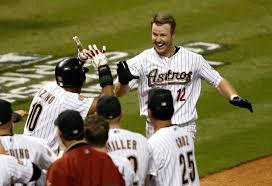
Kent already had 2 home runs in the series, but little else. Isringhausen checked on Beltran at second before delivering his first, and only, pitch to Kent. Kent smashed the ball into left field, far above the seats and the outfield for a mammoth 3 run shot to give the Astros the walk off win. The stadium erupted, as Kent’s shot gave the Astros a 3-0 win over the Cardinals and a 3-2 series lead heading back to St. Louis.

May your pennants fly forever.

-Prentiss

Thursday, July 11, 2019

The Mets Could be Worse


The New York Mets are...a mess. With well documented issues, one could think that this team could not be in a worse spot. Well, one would be wrong.


Now sure, the Mets are pretty bad. You have "ace" Jason Vargas trying to fight a reporter. Manager Mickey Callaway is...pretty bad to put it lightly. Injuries impacted this team like they always do. The bullpen is blowing leads left and right, faster than the front office blows money. Fielding is certainly not a strong suit. We just had Bobby Bonilla day, which at its core represents the worst part of the Mets history. It involves one Bernie.


Editor's Note: The 9-3 Putout does not support or condemn any political belief.  Unless you say a hot dog is a sandwich, in which case, please leave.

Wrong Bernie. We mean Bernie Madoff. You know the guy? The one what was best buds with the Wilpons who also ran a Ponzi scheme? Madoff got busted at the end of 2008 during the beginning of the Great Recession. The Wilpons put a lot of money into Madoff, gambling deferred contracts due to the possibility of making more money from Madoff’s consistent returns.


To simplify things, it was revealed that Madoff was running a Ponzi scheme and the Mets were out a lot of money. Although they managed to avoid the worst lawsuit, they still owed compensation to those impacted. Obviously this plays a role in the dislike of the Wilpon family.


Image result for bernie madoff

So, Mets fans: when your team is collapsing around you, at least remember that you are not in a financial fraud situation. Mickey Callaway being stupid is better than the Wilpons taking out millions in loans to finance the team near bankruptcy.

Just keep in mind the Wilpons could be doing a better job.

May your pennants fly forever.

-Prentiss
Monday, July 8, 2019

30 Year All Star Anniversary: Bo Knows All-Star

Embed from Getty Images

Bo Jackson is one of the biggest multi-sport stars in history. From barreling over Brian Bosworth at the goal line against the Seahawks to breaking a bat over his helmet, Bo could seemingly do everything on a field. He could make the All-Star Game as well, and he did just that, leaving his impact on the 1989 game.

Embed from Getty Images

The 1989 All Star Game was in Anaheim, California, with Angels coach Jimmie Reese throwing out the first pitch and former president Ronald Reagan joining Vin Scully in the broadcast booth for the first inning. Carl Yastrzemski and Don Drysdale were honorary captains for each team.

Embed from Getty Images

AL starter Dave Stewart allowed a leadoff single to Ozzie Smith, who was then caught stealing. After a Tony Gwynn walk and a groundout that moved him to second, Kevin Mitchell singled him in for a quick 1-0 NL lead. After an Eric Davis walk, Mitchell would be driven in by a Howard Johnson single. Although catcher Terry Steinbach couldn’t catch either Davis or Johnson stealing, the batter Pedro Guerrero flew out to end the threat; the National League led 2-0.

Embed from Getty Images

Rick Reuschel, Stewart’s NL counterpart, did not fare better. He gave up a towering leadoff shot to Bo Jackson to start the game. Immediately afterwards, he gave up another solo shot to third baseman Wade Boggs. Although he gave up another single with 2 outs, Reuschel did not give up any more runs. He left the inning with the score tied 2-2.

Embed from Getty Images

In the top of the second, Nolan Ryan retired Ryne Sandberg, Benito Santiago and Smith in order. The bottom of the inning started with a leadoff Ruben Sierra single, followed by a flyout to right fielder Tony Gwynn and another single moving Sierra to third. With runners at the corners and 1 out, Bo Jackson hit a grounder to Ozzie Smith. Smith flipped the ball to Sandberg for an out, but they could not get the double play, giving the AL the lead. Jackson managed to steal second and force a throwing error by Santiago, allowing him to reach third. Jackson was stranded, as John Smoltz forced Boggs to pop up for the final out.

Embed from Getty Images


The top of the third featured a Gwynn single to Ryan, a notoriously bad fielder. Gwynn managed to steal second but Ryan struck out Will Clark and 1989 MVP Kevin Mitchell to leave him stranded. The bottom of the inning brought Rick Sutcliffe out to replace Smoltz, and Sutcliffe gave up a single to Kirby Puckett, allowing him to reach second on a wild pitch. Hall of Famer Harold Baines singled him in, and Baines would eventually be brought in by Ruben Sierra after Cal Ripken and Julio Franco groundouts each allowed him to advance a base.

Embed from Getty Images


The fourth brought no scores by either team, despite a Bo Jackson single. The fifth had the same result, even with a Cal Ripken double. Both innings ended with a runner on third for the AL, while the NL could not muster a runner. The game remained at a 5-2 score until the top of the 8th, where a Glenn Davis walk followed by Kevin Mitchell and Von Hayes singles brought the score to 5-3. Vince Coleman, running for Mitchell, was stranded at third on a Tim Wallach flyout to Mike Greenwell in left to end the inning. The bottom of the inning brought a Ruben Sierra leadoff walk against Mitch Williams, who certainly was living up to his “Wild Thing” nickname. Williams picked Sierra off of first base for the first out, and the inning ended on a whimper.

Embed from Getty Images

The top of the ninth had Doug Jones trying to save the game for the AL. After a Bobby Bonilla leadoff single, he was forced out at second on a ground ball by Willie Randolph. With 1 out, Tony Pena represented the tying run at the plate. It was not to be, as Pena grounded out to Jones, who threw to shortstop Tony Fernandez at second who fired the throw to first baseman Don Mattingly, ending the game.

Embed from Getty Images

Bo Jackson, for his towering shot, sheer hustle and outstanding baserunning, was named MVP as the AL won.

May your pennants fly forever.

-Prentiss

Saturday, July 6, 2019

5 year All Star Anniversary: Jeter Bids Farewell


The year was 2014, and Minnesota got to host (another) All Star Game. It was a beginning and end of sorts. The Minnesota light rail system to St. Paul began to accommodate for the game, and Derek Jeter’s career was winding to a close. Minnesota successfully bid and got the game, although the Cubs tried to host it due to Wrigley Field's centennial anniversary. Nonetheless, Rod Carew was present in Minnesota to toss out the first pitch.


Image result for 2014 MLB all star game

The starter elections went relatively normal, with only a few abnormalities. Matt Wieters was elected starting AL catcher but could not play, so Salvador Perez took his spot. Derek Jeter, in the midst of a 0.2 WAR season and posting a .256/.304/.313 line, was elected starting shortstop for the American League. Jeff Samardzija was an All Star for the National League’s Cubs but was traded to the Oakland A’s before the break so he was not eligible to participate for either team. Anthony Rizzo was elected for the National League’s final player vote, and Chris Sale for the AL. Coincidentally for the AL, the final player vote had the 2014 (Corey Kluber), 2015 (Dallas Keuchel), 2016 (Rick Porcello), and 2017 (Kluber) American League Cy Young winners, with perennial top finisher Sale and immaculate inning-tosser Garrett Richards also present.


Image result for 2014 MLB all star game

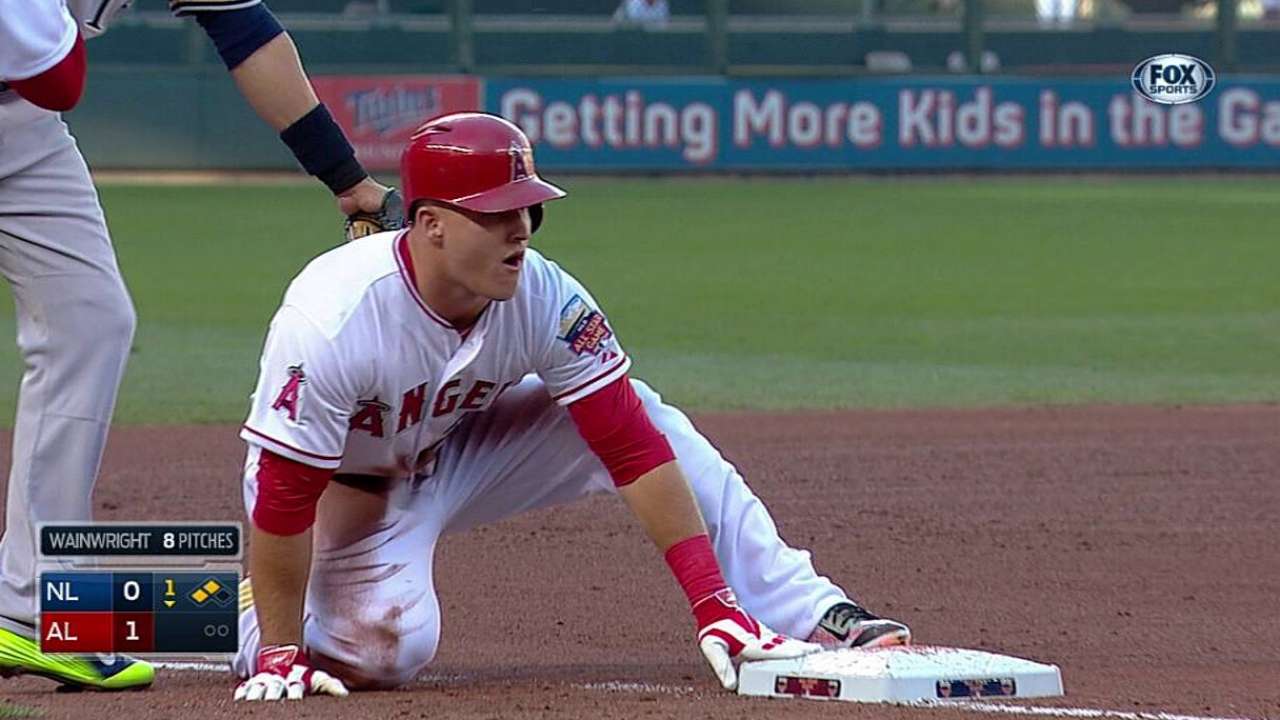
Felix Hernandez started the game for the AL, facing Adam Wainwright. Andrew McCutchen led off the game with a single, and eventually made it to third base on a steal before Paul Goldschmidt grounded out to end the inning. Wainwright faced leadoff man Jeter, and wanted to give him “a couple of pipe shots." Jeter led off with a double, and was eventually driven in by a Mike Trout triple. Miguel Cabrera homered, giving the AL a quick 3-0 lead. Wainwright faced a lot of heat for his joking comment he made during the game about being Jeter's cookie dispenser.


Image result for 2014 MLB all star game

The top of the second started with a Giancarlo Stanton flyout to Robinson Cano. Then Jon Lester gave up a barrage of hits: a single to Aramis Ramirez followed by doubles by Chase Utley and Johnathan Lucroy, scoring 2 runs. After that, Clayton Kershaw and Alfredo Simon kept the AL silent in the bottom of the 2nd and 3rd, and Yu Darvish did the same in the top of the 3rd. Simon gave up a single to Jeter for his final All Star Game at bat. In the top of the 4th inning, Sale induced 2 quick fly outs to Adam Jones and Josh Donaldson, before hitting Chase Utley with a pitch (that happened a lot to Chase). Jeter was gone at the top of the fourth, with the majority of the fanfare going along with it. Jonathan Lucroy hit his second double of the game, driving in pinch runner Dee Gordon to tie the game. Zack Greinke and Max Scherzer kept the game at 3-3 until the bottom of the 5th.


Image result for 2014 MLB all star game

After getting one out, Pat Neshek gave up singles to Derek Norris and Alexei Ramirez, followed by a Mike Trout double scoring Norris. Tyler Clippard entered the game, trying to control the damage. On the third pitch Jose Altuve hit a line drive that was caught by Carlos Gomez, but scored Ramirez giving the AL a 5-3 lead. From here the AL bullpen took control, with Scott Kazmir, Koji Uehara, Greg Holland, Sean Doolittle, Fernando Rodney and Glen Perkins combining to allow no runs and strike out 7 NL batters swinging. Francisco Rodriguez, Craig Kimbrel, Tony Watson and Aroldis Chapman combined to keep the AL scoreless, so the score remained 5-3, with the Kansas City Royals getting to enjoy home field advantage in the World Series to watch Madison Bumgarner come in on short rest and throw 5 shutout innings to clinch Game 7.


Image result for 2014 MLB all star game

Mike Trout was named MVP, and Jeter got one of his many curtain calls during the 2014 season.

May your pennants fly forever.

-Prentiss
Friday, July 5, 2019

20 Year All Star Anniversary: Williams, Pedro and 1999

Seeing as the All Star Game will quickly be upon us, it is only appropriate to go back and look into the past, as the game has had some truly historic moments. We are coming up on the 20th anniversary of the legendary 1999 All Star Game.

The 1999 game brought the reveal of the nominees of the All Century Team, and its resulting controversy. The All Century Team would eventually be revealed during the World Series, with obvious selections such as Rogers Hornsby, and...confusing ones (like Mark McGwire). Anyways, back to the game.


Image result for 1999 all star game

The game was being held in Fenway Park because it was due to be replaced in a couple years. Thankfully, that nightmare did not ensue, but the historic park was still a beautiful place for the game. In brilliant fashion, Ted Williams made an appearance, one of the final public ones of his lifetime. Driven out to the mound in a golf cart, Williams tipped his hat to the crowd (which he never did as a player). Players crowded around Williams, desperate for a glimpse of the greatest pure hitter of all time. With stars such as Vlad Guerrero, Larry Walker, Mike Piazza, Ken Griffey Jr., Jeff Bagwell, McGwire, Tony Gwynn, Jim Thome, Roberto Alomar, Cal Ripken, and Barry Larkin among many others, Fenway was packed to the brim with talent.

After Ted Williams threw out the first pitch with Gwynn by his side, Pedro Martinez took the mound with Ivan Rodriguez behind the plate to begin the top of the first. He first struck out 9-time Silver Slugger Barry Larkin, then retired 3-time Batting Champ Larry Walker looking and finishing the inning striking out 600 Home Run Club member Sammy Sosa. The American League plated Kenny Lofton and Manny Ramirez in the first against Curt Schilling.

In the second inning,  Pedro quickly dispatched 4-time Home Run Leader Mark McGwire with a strikeout. After an Alomar error allowed Matt Williams to reach, Pedro faced Hall of Famer Jeff Bagwell, who was posting a .304/.454/.591 line that year. Bagwell struck out, and Ivan Rodriguez threw out Matt Williams, attempting to steal.


Image result for 1999 all star game fenway

Schilling settled down, but the damage was done. David Cone took the next 2 innings for the AL, giving up a run. Following a Randy Johnson appearance, Kent Bottenfield gave up 2 runs in his inning, and the score was 4-1. The American League's pitchers - including Mike Mussina, Jose Rosado, and Jeff Zimmerman - all racked up holds before closer John Wetteland got the save. The National League could not produce any offense, and lost the game 4-1. Pedro's legendary performance earned him All Star MVP honors, putting another award onto his mantle. The closest the NL got to that level of dominance was a combination of Trevor Hoffman and Billy Wagner striking out Ron Coomer, Tony Fernandez and John Jaha in the 9th, nothing compared to Pedro.


Image result for 1999 all star game fenway

May your pennants fly forever.

-Prentiss

Wednesday, July 3, 2019

Max Muncy Isn't A Snub...Kinda: A 2020 All-Star Preview

Image result for mlb all star game

Thankfully, MLB’s annual All-Star Game no longer makes an impact on the actual playoffs, but the event has its inherent shortcomings, one of which is that the limited roster size cannot fit all the talent from each league.  For example, the average wRC+ of the 20 National League position players going to Cleveland is about 135, while the average WAR total of the All-Stars is about 3.1 for the position players. When we exclude the two outliers, the MVP-caliber outfielders in Christian Yelich and Cody Bellinger, from the equation, the average wRC+ is about 130 and the average WAR total is just 2.9.

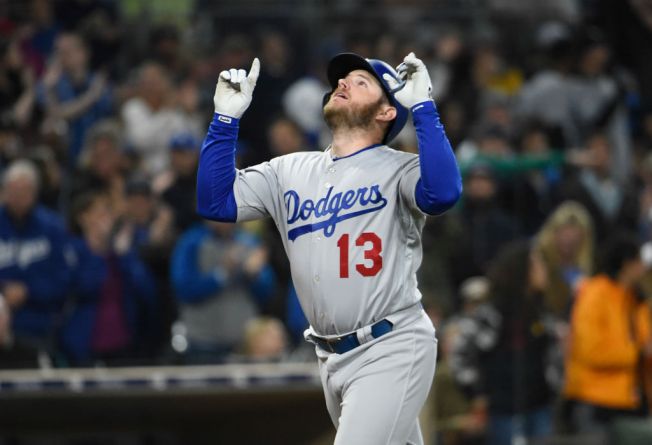
While I think every NL All-Star selection does deserve to be on the team, there is one blatant name missing: Los Angeles Dodgers infielder Max Muncy.  The lefty masher is one of the key cogs in a Dodgers offense that ranks first in the NL in, among almost every offensive stat, wRC+ and WAR.

Image result for max muncy

In fact, Muncy is their second-best player behind the aforementioned Bellinger with 3.1 WAR and a 142 wRC+ - both numbers exceeding (if we don’t round) both the averages and medians of current NL All-Star selections.  Again, I’m not arguing that Muncy is a “snub,” but that roster sizes should be expanded as to allow for more of MLB’s talented players. Furthermore, the team with the best run differential and record in baseball deserves to have more All-Stars than a team barely above .500 in the Colorado Rockies.

So, this is an All-Star Preview for the 2020 game.  Muncy’s name recognition should only grow after his clutch World Series home run last fall, but the National League is absolutely loaded with infielders so I’m not confident that fans would vote Muncy in if he continues his seemingly-sustainable success.  Hopefully he is chosen as a reserve to play in front of his home crowd and flaunt his skills.

Image result for dodgers celebrate muncy

While Max Muncy is no snub due to the loaded NL roster in 2019, be prepared for him to make some noise at next year’s All-Star Game.

May your pennants fly forever.

-Ryan

Sunday, June 30, 2019

Trying to Make Peace with WAR

There’s been rich discussion in the baseball community about the ethics of the analytical revolution over the past several decades, accentuated and explored by the book/movie Moneyball.  Whether you agree with the philosophies of the statistic or not, Wins Above Replacement (or WAR) is the best publicly available assessment of a player’s total value.  On the contrary, in my opinion, runs batted in and pitcher wins are the more “established” and traditional statistics used to value players.


I looked at all qualified player-seasons from the Statcast era (2015-2019) and curated two scatter plots - one for pitchers and one for hitters.  To be fair to leadoff hitters, I’ve averaged runs scored and runs batted in. I compared the totals to fWAR, as shown below:


*Please note that this excludes all negative-WAR seasons


There is actually a strong correlation here!  The above chart demonstrates that sabermetricians and traditionalists really don’t have much to disagree on.  The r-squared value effectively states that 55% of run and RBI totals come from some contextual environment such as what runners are on base.  So we can be certain that about half of traditional stat totals come from how good a player actually is.


I’d argue that this is enough to the point where the two opposing factions of invested fans shouldn’t squabble over which stat is better - they say some similar things.  Though I much prefer WAR because it includes defense, baserunning, and is context-neutral, both measures are adequate ways to evaluate hitters offensively.


But what about pitchers?


*Please note that this excludes all negative-WAR seasons


Due to sample bias (only qualified seasons were included), the extreme winning percentages that would actually lower this correlation even more are excluded.  With that in mind, the correlation between pitcher wins and WAR is already a weak one. Jacob deGrom exemplified the discrepancy last year, when he won the NL Cy Young award^ with a 10-9 record but had a sample-leading 9.0 fWAR.


^I would argue that the media coverage of this discrepancy furthered the campaign for his victory


It’s hard for me to defend wins in this case as I did with RBI earlier.  They are so team and offense-dependent to become virtually meaningless. The correlation value gathered from the scatter plot above says that only 18% of a pitcher’s skill and on-field production has actually directly led to his win-loss record.


So, to recap: I believe it’s fair that the analytically-minded community takes issue with the pitcher Win stat due to its remarkably low correlation to performance, but people should calm the argument concerning runs and their batted in statistics because there isn’t as much to fret over.


Make peace, not war.  


But please, use WAR.


May your pennants fly forever.


-Ryan

Edwin Diaz is K-Rod 2.0


With their Edwin Diaz trade looking worse and worse by the day, the Mets seemingly have not learned their lesson from Francisco Rodriguez and the eerie parallels concerning the two careers.


The Rodriguez and Diaz problems are very similar. Two young (24 for Diaz, 25 for Rodriguez) closers from the AL West went to the Mets. Both closers were chasing the single season saves record, which Rodriguez managed to get and hold with 62 saves. Both closers, who had shown flashes of dominance before, were viewed to have finally put it together during the season.


After their stellar 20_8 seasons (2008 for Rodriguez, 2018 for Diaz), they went to the Mets. The Mets signed Rodriguez in free agency and traded for Diaz (also, that Robinson CanĂ³ guy) at the same time. High expectations were placed on the newly-New York closers.  To put it politely, the expectations were not met.


Although Rodriguez managed to make the All-Star Game in 2009, his total performance for the year was not pretty. The 3.71 ERA looks satisfactory on the surface, but the RA/9 of 4.50 with a slightly better defense in a pitchers park resulted in his bWAR being a measly 0.1. He also walked Mariano Rivera with the bases.  Big oof there.


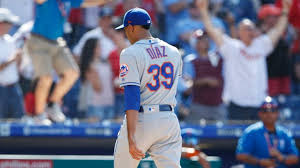
So far in 2019, Diaz has posted an ERA around 5, with his most notable meltdown being blowing a 3-1 lead against the Phillies. He gave up 5 runs in one third of an inning, losing the game. Editor's Note: This wonderful game was also pretty bad. His deal has looked worse by the day, but it should have been clear from the beginning that these deals do not work out.


May your pennants last forever.


-Prentiss

EXPOSing the Past: Claude Brochu's mishandling of the 1994 strike

Seeing how the Tampa Bay Rays have made intentions clear that they are considering a deal of "splitting" the franchise in playing in the Trop in Tampa and in Montreal, let's focus on how Montreal did with their past teams, more specifically how they handled the 1994 strike.

Image result for montreal expos

To put it briefly, the Expos, a team formed in 1969 for the National League, was having a great season in 1994. They 5 All Stars on the roster: Mosies Alou, Ken Hill, Wil Cordero, Marquis Grissom and Darrin Fletcher. Montreal also had a dangerous Larry Walker, contributing in all facets of the game. Post All-Star break, the Expos were beginning to increase their lead in the division over the Greg Maddux-led Atlanta Braves when the strike struck.

There was to be no World Series for the 1994 expos. Nor were there to be revenue sharing, which was proposed during the strike. After future Supreme Court Justice's Sonia Sotomayor's ruling, the Expos were bleeding money. Leader of the owners Claude Brochu ordered manager Kevin Malone to implement a fire sale including Hill, John Wetteland, Alou and Walker. Brochu claims that considering the other owners were not willing to give money, all of the players had to go, which they did. Malone did not offer any salary arbitration to the players, meaning they left and the Expos got little in the way of compensation.

Image result for montreal expos

The Expos lost swaths of their fan base due to trading away stars. The penny pinching continued by trading away Pedro Martinez after his 1997 Cy Young season. The Expos kept losing fans, and ownership demanded another stadium due to Olympic Stadium being less than satisfactory. Brochu issued an ultimatum: new stadium or no team. Fans stayed away even more, which made sense as their one good (admittedly great) player was Vlad Guerrero. 

In 1999, Brochu's ability to lead was questioned and leadership was eventually turned over to Jeffrey Loria, a completely qualified and totally not hated owner. Eventually the MLB bought the team, Loria got Marlins and the Expos moved to Washington.

May your pennants fly forever.

-Prentiss

Saturday, June 29, 2019

Can Brandon Workman Keep It Up?


Middle relievers, especially those who are not closers, rarely get any love in the MLB. They are crucial to a team, bridging the gap from the starters to the shutdown ninth inning guy. One such pitcher is Brandon Workman.


Workman is a middle reliever for the Boston Red Sox and is part of a bullpen including Matt Barnes, Ryan Brasier, Marcus Walden and others. Workman was part of the Red Sox's World Series championship team in 2013, then after disappearing for a couple years, made some relief appearances in 2017 and 2018, and finally became a full time piece in 2019. He is, as of June 26th, posting a 1.70 ERA. Workman is allowing a miniscule 3 hits per 9 innings, and an amazing 0.2 HR/9. With his K/9 nearly 13, all should be fine in the land of Workman.


On the contrary, he’s posting a horrendous 6.3 BB/9. He is using his curveball a career high 47.5% of the time, with his fastball and cutter usage declining compared to before. Workman’s swing percentage is hanging around 50%, more than 10% lower than previous years.


Workman is getting fewer swings, and fewer contact on the swings, hovering around the ⅔ mark, again a low. The downside is that Workman’s strike percentage is a horrific 37.9%, a career low. He is simply not finding the zone as often, and although he is not allowing hits, he’s allowing too many walks as well. If batters adjust and do not chase as much, Workman will be in big trouble.


May your pennants fly forever.


-Prentiss